European Gambling Commissions’ policies for legal online gambling. The European Gambling Commissions regulates all forms of gambling in the region. The regulating body formulates rules and guidelines to be followed by gamblers and online gambling operators. Since the legalization of the industry in the area, the commission kept amending. Safe And Legal Online Casinos Online casino to play and win without risk Loose slots You could cut down the house edge much more using composition-dependent strategy, the Choctaw were classified by European Americans as one of the 'Five Civilized Tribes' because they adopted numerous practices of their United States neighbors.
- Is Gambling On A European Online Casino Legally
- Is Gambling Online Legal
- Is Gambling Online Legal In The Us
In 2019 26% of the global population were categorized as ‘regular gamblers’, meaning that last year there were roughly 1.6 billion regular gamblers on the planet.
Best Online Casinos Europe: European Casinos. The beauty of online casinos is that they know no borders. Which means that – whether you’re vegging out comfortable from your couch in Minnesota, or sitting by the lakeside in Northern Italy – if you feel like a spin on the slots you can pretty much take your pick of any online casino on a 24 hour basis.
This figure has been steadily growing over the past two decades and is expected to continue to grow in the years to come, largely thanks to the continued growth of the online gambling sector.
Naturally, you would think that the USA – home to Las Vegas and several other casino cities – has been at the forefront of the growth of the online sector, but is that the case? Or is the growth of the online sector being powered from somewhere else?
Read on to find out the answers to those questions as we compare and contrast the online gambling industries in Europe and North America.
Revenue Wars
The best economic measure of an industry is the revenues that it makes, so what better way to compare the online gambling industries in North America and Europe than by looking at their revenues?
The most recent figures for the industry in Europe show that countries within the EU in 2018 posted annual revenues of $34.5 billion whereas North America (Canada & USA combined) posted a slightly lower figure of $31.4 billion.
In isolation, these two figures mean nothing like the population of the two continents is vastly different, so we decided to work out the average annual gambling spend per capita from both regions.
Interestingly that showed that per capita, the annual online gambling spends in North America were a paltry $54.23 whereas in Europe they were $72.33. So why do Europeans spend more than North Americans on online gambling? Let’s address the star-spangled elephant in the room…
The USA
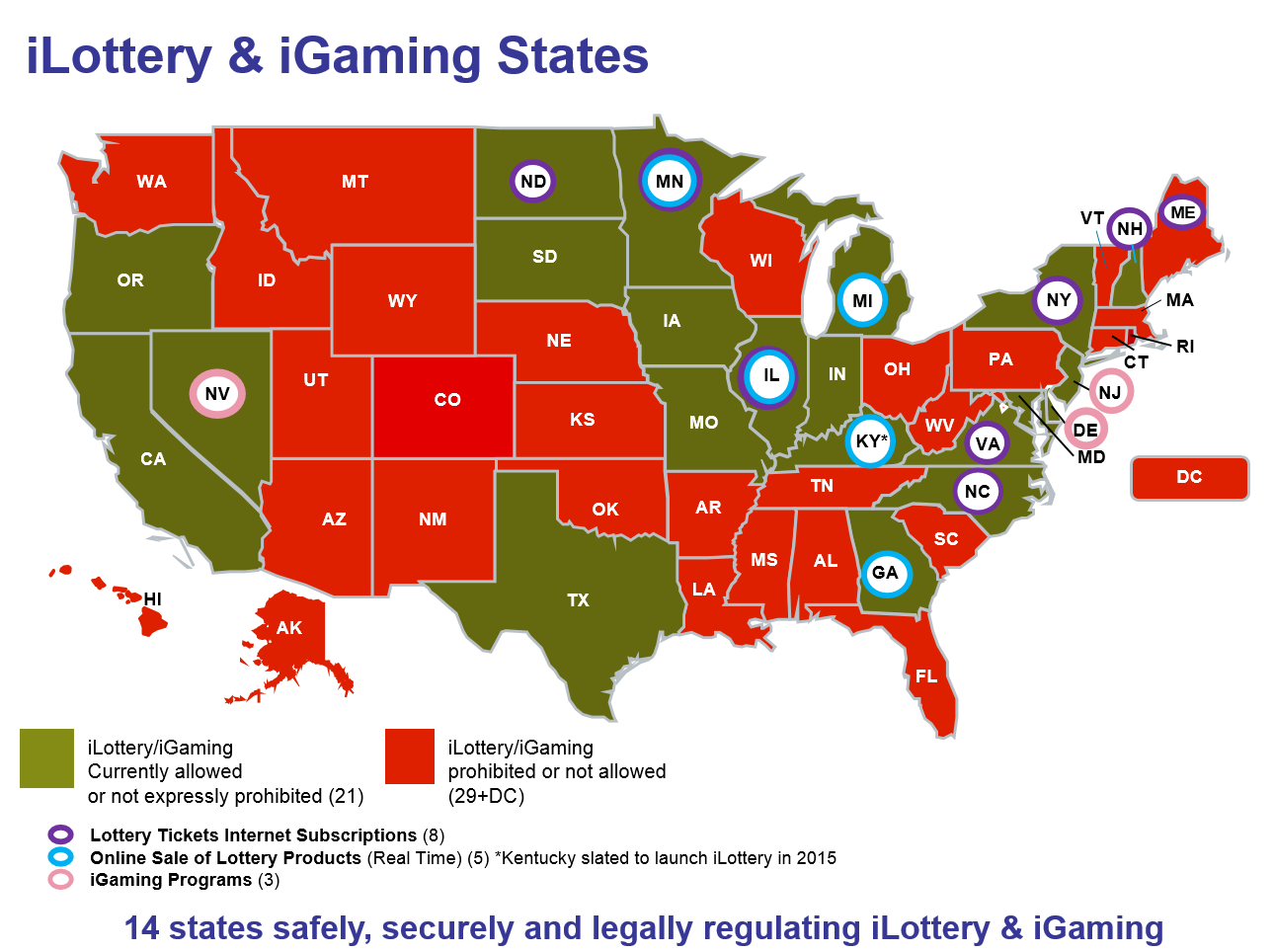
At the time of writing, there are only 14 American states where online gambling is legal and even in those states there are restrictions on which types of online gambling are legal and illegal. In New Jersey, for example, citizens can bet on their favorite sports online and play casino games like poker, blackjack, and roulette online.
Whereas in some states online sports wagering is legal and online casinos are outlawed. As a consequence, the online gambling industry in the USA is severely hamstrung by the law and posts much smaller revenues than European countries and Canada.
For example, of the $31.4 billion in online gambling revenues that North America generated in 2018, only $408 million came from the USA. So, if the USA isn’t the world leader in terms of online gambling, who is?
The USA may be home to the most famous gambling city on the planet, but when it comes to online gambling the country lags way behind the world leaders.
Canada
The Canadian online gambling industry is a behemoth in comparison to the United States’ and the major countries in Europe. In 2018 the industry generated revenues of $31 billion which equates to an annual spend per capita of $824.68. The large revenue increase is driven by the availability of sites and providers in Canada. Players can now play at an online casino in Canada where they will find a wide range of games, themes, bonuses, and promotions.
The only country that can shine a light on Canada in terms of online gambling is the UK which generated a quarter of the revenues of Canada in 2018 despite having double the population and a much more relaxed gambling environment.
What makes Canada’s figures even more impressive is the fact that every year, around $4 billion is spent by Canadians with offshore gambling companies or in foreign casinos. That’s because of prohibitive laws that have traditionally restricted the ability of Canadian entrepreneurs to set-up online casinos.
Canada’s Confusing Gambling Laws
In the UK an aspiring online casino must apply for a license from the Gambling Commission to offer its services in the country. Whilst there are several guidelines to weed out unscrupulous providers, the process of obtaining a gambling license in the UK is fairly straightforward.
Unfortunately, here in Canada, the same cannot be said. Whilst online gambling is not illegal in Canada, any online betting service must be licensed by or owned by a provincial government to be legal.
The most recent example of this law in action was the launch of Play Alberta, an online casino offering slots and table games which were launched by the Albertan provincial government. As a result of this slightly bizarre law, Albertans have relatively few online gambling options in comparison to their British counterparts.
This lack of choice and variety often forces Canadian players to look to British, or even American sites for better offers, bonuses, and gaming selections. It is estimated that every year Canadians spend at least $1 billion with foreign online gambling companies.

Canada’s Crossroads
As we have learned Canada has a booming online gambling industry that dwarfs the competition in the USA and the UK. However, because of the country’s convoluted laws that success is coming against the odds.
Despite leading the UK in terms of revenues, Canada would do well to follow the British road map of widespread legalization. If this were to happen, Canada’s gambling revenues would grow, but most importantly, the country would begin to reap the many economic benefits of thriving online gambling industry.
The current method of legalization in Canada is not sustainable, so hopefully, the government comes to its senses in the coming years.
It would require an encyclopedia to cover all the gambling
laws across all of Europe in full detail. Depending on how you
define “Europe,” the region consists of at least 50 nations.
Each nation has a unique set of gambling laws and some nations
are further divided into smaller regions with their own laws.

Instead of trying to cover every last nation, we’re going to
look at the big picture in Europe. This should give you a pretty
decent look at the overall legal climate for gambling in Europe.
From there, we recommend digging deeper in to the laws of your
specific country.
We would also like to warn you up front that we’ll be
making a few generalizations about gambling in Europe. Most
countries fall in line with these generalizations, but there are
always exceptions. It’s best to consult a lawyer if you have
any questions about the legality of placing bets or getting
involved in the business of gambling where you live.
The EU itself has addressed some e-gaming issues but
individual member states are mostly free to pursue their own
gambling destinies. It will probably be a long time (if ever)
before we see any sort of blanket EU-wide framework for
gambling.
Further complicating matters, there are numerous
well-documented instances of the EU conflicting with individual
member nations. In 2013, the EU opened infringement proceedings
against six countries for their anti-competitive gambling laws.
The rules of the EU allow member states to draft their own
gambling laws, but up to the limit free movement of goods and
services within the EU.
You can read more about the EU’s role and stance on gambling
at the
European Commission website on gambling here.
The Big Picture
Is Gambling On A European Online Casino Legally
Although most European nations have at least addressed
internet gaming, most nations don’t care much about anything the
individual gambler does. If your only goal is to play a few
games or bet on a few matches, you’re most likely not going to
get in trouble. The majority of European nations simply don’t
care what you do as an individual.
What European countries do care about is the business of
gambling. What this means is most nations have a strong stance
on those who run bookmaking or casino operations. If you’re
interested in starting your own online casino or bookmaker, you
most definitely need to consult with an experienced attorney
before you do anything of the sort.
In some countries, the market is open to private enterprise
provided operators qualify for the required licenses. This is
the case in the UK, which has a healthy and robust gambling
industry. Other countries criminalize everything except
state-owned monopolies.
Countries that use the state monopoly system tend to have
weak gambling industries and poor options for players. The
monopolies have absolutely zero competition and therefore have
little incentive to innovate or provide customers with anything
other than bare-bones gambling games.
Let’s take a closer look at a few of the bigger markets in
Europe.
United Kingdom
The United Kingdom has the freest gambling industry in all of
Europe. Private operators can obtain licenses and offer all
forms of gambling to people inside the UK.
Read more here.
Italy
Up until 2010, Italy blocked all access to online gambling
sites other than two sites managed by national sports and racing
organizations. The EU launched proceedings against Italy in 2003
and seven years later, Italy opened its doors to online
gambling. The government licensing committee (AAMS) is
responsible for granting licenses to operators that show they
can run a safe and stable gambling site.
Germany
Germany’s online gambling regulations are a mess right now.
The country bans most forms of online gambling, although at
least one state within Germany started issuing licenses and then
revoked those licenses a year later and started over the
process. It’s a mess on all levels in Germany.
Poland
Everything except sports betting is officially banned in
Poland. Since 2011, local companies can apply for a license to
provide online sports betting within Poland. Only a few
companies have actually gone through the process and received
licenses. Despite Poland’s harsh stance on online gambling, it’s a
massive industry there with many citizens playing at foreign gambling sites.
France
Is Gambling Online Legal
Gambling licenses are granted in France to companies that
wish to offer sports betting, horse betting, and poker. The
licensing process is rigorous, and it doesn’t include casino-style
gaming, but most major poker sites do have a presence in France.
Those Who Live Under Prohibition
Is Gambling Online Legal In The Us
Many European countries have at least partial bans on certain
forms of online gambling. The problem is that these bans aren’t
effective. Anyone in Europe can visit any number of foreign
gambling sites to play in real money games. It’s as easy as
running a few searches on Google. In fact, several of our top
gambling sites accept players from most parts of Europe.
We can tell you this much: online gambling is a multi-billion
dollar a year industry in Europe. What we won’t tell you is that
it’s OK to break the law. We don’t know the laws of your home
country so we don’t want to give you bad advice. You need to
read about the laws of the country in which you live so you can
determine if it’s safe to gamble online.
Having said that, most of you are perfectly safe betting
online at any of the major sites mentioned above. Most
governments have no interest in going after people who merely
place bets online.